
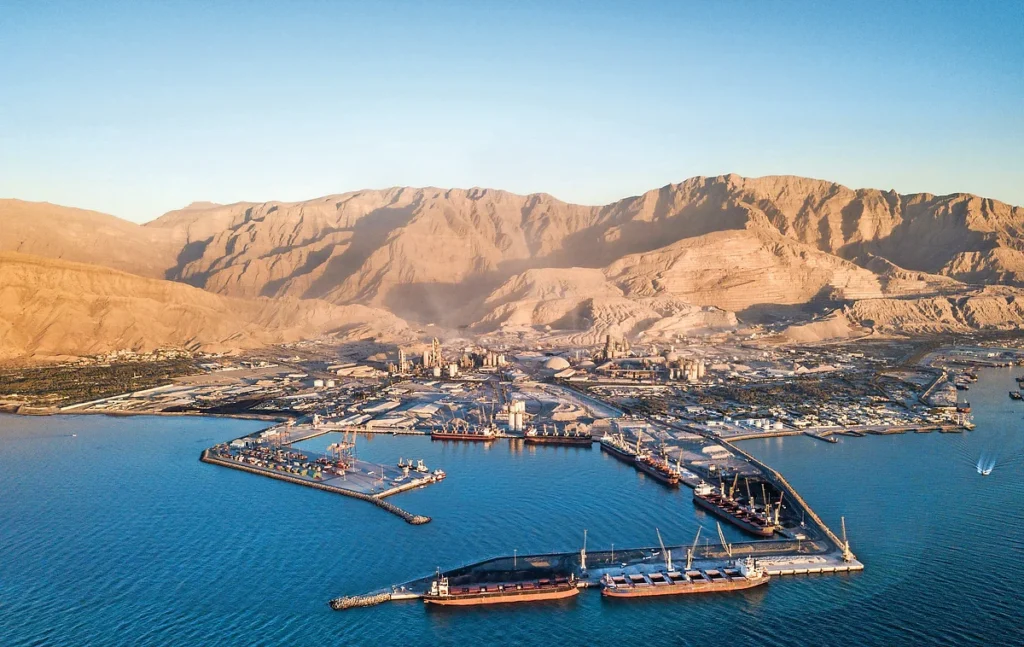
RAK’s port expansion and northern positioning are strengthening the UAE’s logistics network through deeper access, cross-border trade, and supply chain diversification. The UAE’s logistics ecosystem has historically been structured around scale, centralisation, and global connectivity. Dubai established itself as a dominant maritime hub through Jebel Ali Port, while Abu Dhabi expanded its capabilities through integrated industrial zones and port infrastructure. Together, these centres have positioned the UAE as one of the most efficient logistics gateways globally. That foundation remains intact.
However, global supply chains are undergoing structural changes driven by geopolitical risk, trade disruptions, and increasing pressure on critical maritime chokepoints. As a result, logistics strategies are shifting from efficiency alone towards resilience, redundancy, and route diversification. Within this evolving framework, Ras Al Khaimah is emerging as a strategically relevant node, offering geographic advantages and infrastructure capabilities that complement the UAE’s existing logistics network.
Northern trade access
Ras Al Khaimah occupies the northernmost position within the UAE, located close to the Strait of Hormuz and directly adjacent to Oman. This positioning provides immediate access to northern trade routes and facilitates cross-border logistics flows that are structurally different from those of southern ports.
This geographic advantage has historically defined the emirate’s role in regional trade. Under its former identity as Julfar, Ras Al Khaimah functioned as a major maritime hub connecting the Gulf with India, East Africa, and Southeast Asia. In the contemporary context, the same geographic positioning is being leveraged to support modern supply chain requirements.
The relevance of northern access lies in diversification. By enabling cargo movement through alternative routes, Ras Al Khaimah reduces dependence on centralised corridors and introduces flexibility into logistics planning. This flexibility becomes critical in periods of disruption, where congestion or instability can impact primary trade routes.
Current scale
The operational backbone of Ras Al Khaimah’s logistics capability is the network managed by RAK Ports. At its core is Saqr Port, currently recognised as the largest bulk-handling port in the Middle East and Africa. The port operates approximately 47 berths and handles a capacity of around 100 million tonnes annually. Its role is central to the UAE’s construction supply chain, particularly through the export of aggregate, cement, and building materials sourced from the Hajar Mountains.
Beyond Saqr Port, the wider network includes RAK Maritime City Free Zone, Al Jazeera Port and Shipyard, Ras Al Khaimah City Port, and Al Jeer Port. Collectively, these facilities handle more than 75 million tonnes of cargo annually, spanning bulk commodities, breakbulk, project cargo, general cargo, and containerised shipments.
Import and export volumes have shown consistent growth over recent years, reflecting both regional demand and the emirate’s expanding industrial base. This established capacity provides a foundation for further expansion rather than requiring development from a low baseline.
Depth advantage
The Saqr 2.0 development represents a significant advancement in Ras Al Khaimah’s maritime infrastructure. Designed as a $1 billion greenfield project, it introduces capabilities that extend beyond incremental capacity increases.